Payment Infrastructure Problems: When Your Provider Becomes the Bottleneck
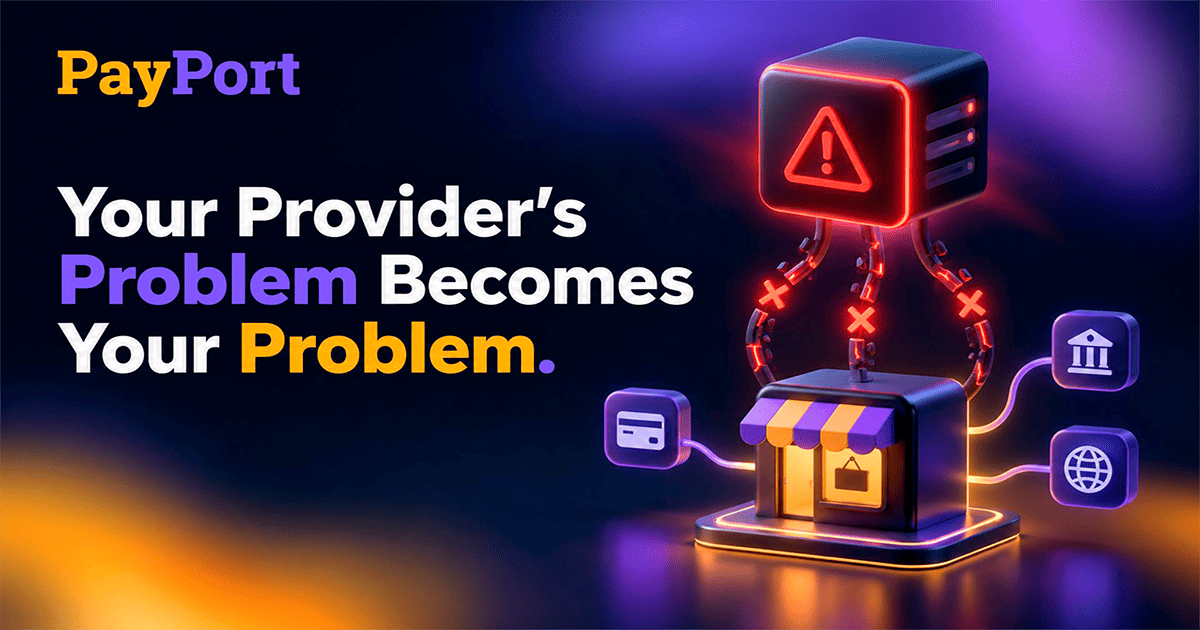
Payment infrastructure often looks reliable until the business asks it to do something new. A merchant launches in another market, transaction volume rises, or a peak sales period places unexpected pressure on the checkout. Suddenly, an integration that worked yesterday becomes a source of operational uncertainty.
These payment infrastructure problems do not always begin with a complete outage. They may appear as inconsistent authorization outcomes, delayed incident responses, confusing transaction statuses, or limited visibility into which part of the payment flow is failing. For a high-volume business, even intermittent friction can affect customer experience, reconciliation, and commercial planning.
The important question is not whether a payment provider will ever experience an incident. It is whether your organization can identify, contain, communicate, and recover from one without losing control of its operations.
Why payment infrastructure becomes a business bottleneck
A payment stack connects several moving parts: the merchant checkout, payment gateway, processors or acquiring partners, local payment methods, fraud controls, and reconciliation systems. A problem at one layer may be visible at another. A decline, for example, could relate to issuer behavior, risk rules, integration errors, or provider availability. Treating every symptom as a gateway failure leads to poor decisions.
Infrastructure becomes a bottleneck when the business can no longer separate these causes quickly enough to act. The consequences extend beyond the technical team. Customer support handles unexplained payment attempts; finance faces settlement or reconciliation uncertainty; commercial teams hesitate before launching campaigns or entering new markets.
Five warning signs worth investigating
1. Payment performance changes without a clear explanation
A sudden change in approvals, timeouts, or abandonment deserves investigation, but no single metric tells the whole story. Track payment outcomes by market, method, provider, transaction type, and time window. Compare like with like before concluding that a provider is underperforming.
2. Incident escalation depends on individual contacts
If resolution depends on finding the right person in a chat, the escalation process is too fragile. Merchants should know which support channel handles critical incidents, what information to provide, how severity is assessed, and when updates can reasonably be expected.
3. A new market introduces unexpected complexity
Expansion can require additional local payment methods, different currencies, country-specific risk checks, and new settlement arrangements. A previously adequate setup may not cover the operational requirements of another market.
4. Reconciliation takes increasing manual effort
Successful payment authorization does not complete the financial lifecycle. Transaction identifiers, refunds, disputes, fees, settlement reports, and actual funds received must be reconciled. Persistent exceptions or inconsistent reporting can consume finance and operations capacity.
5. A single provider creates excessive dependency
Concentration risk grows when one integration becomes a single point of operational failure. That does not mean every merchant needs multiple providers immediately. It means that the dependency should be visible, assessed, and addressed according to transaction volumes, available alternatives, and the cost of additional complexity.
A practical payment infrastructure review
Before replacing or adding a provider, conduct a structured review. Start by establishing a baseline using data from a representative period. Record authorization attempts and outcomes, processing errors, response times, incident history, transaction volume by market, settlement exceptions, and time spent on support escalations.
Then work through four questions:
- Where does friction occur? Separate checkout experience, payment initiation, processing, provider communication, and post-payment operations.
- What does the evidence show? Use transaction-level reporting and incident records rather than a single aggregate success rate.
- What happens under stress? Review peak-volume periods, launches, and unusual transaction patterns alongside everyday operations.
- What can actually change? Identify configuration improvements, escalation changes, routing adjustments, method coverage gaps, and cases where an additional provider makes sense.
Risk, compliance, and commercial feasibility should be assessed alongside technical performance. A new integration cannot solve an unsupported business model, unsuitable market coverage, or missing compliance documentation.
Questions to ask a prospective payment provider
A useful provider conversation goes beyond a headline processing rate. Ask which markets and payment methods are available for your specific business profile; how incidents are triaged; which reporting fields are exposed; how refunds and disputes are handled; what settlement arrangements may apply; and what onboarding and compliance reviews involve.
For higher-volume merchants, also clarify volume assumptions, integration dependencies, changes during traffic spikes, and the responsibilities of each party. An answer that includes conditions and limitations is often more useful than a broad promise.
When should a merchant consider changing its payment setup?
A single incident is not necessarily a reason to migrate. Repeated operational uncertainty, unresolved reporting issues, unsuitable market coverage, or an inability to scale responsibly may be stronger signals. Compare the potential benefit of a new arrangement against integration cost, operational disruption, contractual obligations, and the time required for due diligence.
If multiple providers are being considered, prepare a transition plan that covers testing, monitoring, rollback, reconciliation, and support ownership. Decisions are easier when the business has clear criteria rather than reacting during a live incident.
How PayPort approaches the conversation
PayPort works with qualified businesses evaluating payment processing and infrastructure needs, including merchants operating across multiple markets. Discussions can cover payment methods, integration considerations, transaction flows, operational expectations, and the compliance information needed to assess a project.
Depending on the project and compliance requirements, onboarding may begin from three business days. This describes a possible starting timeline, not a guarantee that an account or processing setup will be approved or activated within that period.
The takeaway: assess payment infrastructure before recurring friction begins to dictate growth decisions. A more informed provider review begins with accurate operational data, explicit responsibilities, and a realistic understanding of implementation constraints.
Frequently asked questions
What are common payment infrastructure problems?
Common issues include transaction timeouts, inconsistent processing outcomes, limited reporting, slow incident escalation, reconciliation exceptions, and payment-method limitations. The underlying cause should be verified before assigning responsibility to a provider.
Does adding another payment provider guarantee better acceptance rates?
No. Results depend on merchant profile, geography, payment methods, issuers, risk rules, transaction mix, integration quality, and other factors. Additional providers can improve flexibility but also introduce complexity.
When is the right time to review payment infrastructure?
Review it ahead of planned market expansion, major volume increases, contract renewals, and significant product launches. An earlier review gives teams more options than an emergency migration.
PayPort · Payment infrastructure
Let’s review your payment requirements.
Discuss your markets, payment methods, operational priorities and onboarding requirements with our team. Solutions and timelines are subject to project assessment and compliance review.
Contact PayPort